
Guyana Amazon Warriors vs Jamaica Tallawahs CPL 2020: What a Five-Year-Old Fantasy XI Still Reveals About Squad Balance
Five years on, a pre-match India.com fantasy note for the 22 August 2020 Hero CPL fixture at Brian Lara Stadium still earns a careful read for one reason: it shows how role distribution, not star power, sets a fantasy XI's ceiling.
Filed under: Fantasy · How to Play · Retrospective audit. Original event date 22 August 2020. Hero CPL T20 2020, Guyana Amazon Warriors vs Jamaica Tallawahs, Brian Lara Stadium, Trinidad.
Why a five-year-old squad list still belongs on a beginner's reading list
The original India.com fantasy preview for the Guyana Amazon Warriors versus Jamaica Tallawahs game was filed at 16:33 IST on 22 August 2020, with the toss at 11:15 PM IST and the first ball for 11:45 PM IST. The note was published before the match began. It named a wicketkeeper, four batters, two all-rounders, three specialist bowlers and one seam-bowling all-rounder. It did not record a result. Sony Sports Network was named as the broadcast home.
That detail matters more than the names. A pre-match preview is a snapshot of how a writer reasoned about a squad under deadline pressure, not a record of what happened on the field. The five-year gap between the preview and a modern reader is useful precisely because the result is unknown: every reader can test the framework on a fresh fixture and see whether the same role-distribution logic survives across eras and tournaments.
This piece treats the August 2020 preview as a squad-balance audit, not a tip sheet. It walks the eleven names back through the role logic that ordered them, asks where that logic could mislead a beginner in 2026, and shows how to apply the framework to a fixture played tonight without copying 2020 squad names. The deeper fantasy cricket walkthrough for this site sets the same role-by-role method from scratch and is the natural next stop for readers who want the full method before they touch a contest.
The 22 August 2020 fixture, in one row of context
Squads and form notes are date-bound to August 2020. They should be read as that and never as current form indicators.
Step one of the audit: count the roles before you count the names
The cleanest way to read any fantasy XI is to count how many of each role the lineup actually carries, then check whether that count matches the contest's role rules and the fixture's likely shape. The August 2020 XI carried one wicketkeeper, four batters, two all-rounders and four bowlers (if Russell and Paul are counted as bowlers, which the preview's role assignment implies). On a typical 1+3+2+4 or 1+4+2+3 split, both shapes sit inside a normal T20 role allowance.
The shape is more interesting than the count. Three of the four bowlers were spinners (Lamichhane, Mujeeb, Tahir); only Naveen offered left-arm pace and Paul offered seam-bowling all-round balance. That is a deliberate mix, not a stylistic preference. CPL conditions in Trinidad in late August typically reward bowlers who can change pace or extract turn, especially in the middle overs, and the writer's choice of three wrist or finger spinners plus one left-arm pacer reflects that fixture context.

Where the count quietly does the work
Counting roles up front forces the reader to confront the depth of every column. A 1+4+2+4 XI is light on all-rounders and therefore depends on the batters scoring the bulk of the points; a 1+3+3+4 XI trades batting depth for all-rounder optionality. Neither is wrong. Both are statements about how the writer expects the fixture to play out. The August 2020 preview picked the first shape, which implied a bet on spin and on Andre Russell carrying the all-rounder column. A modern reader who copies the role split without copying the names is reproducing the bet; a modern reader who copies the names while keeping a different role split is contradicting the bet without noticing.
Step two: re-sort the batters by role, not by reputation
The suggested batting names — Brandon King, Ross Taylor, Rovman Powell, Asif Ali, plus the wicketkeeper Chadwick Walton — read at first like a single tier of well-known Caribbean and Pakistan players. They are not. They map to different jobs inside the probable XIs the preview also listed. King and Hemraj were the projected Guyana openers, which means guaranteed minutes if the top order holds. Taylor was a middle-order anchor with experience in run-chases. Powell and Ali on the Jamaica side were middle-to-late finishers, which means their fantasy points depend on wickets falling in a specific pattern that may not happen.
Sorting batters by role rather than reputation is the single highest-value habit a beginner can borrow from any retrospective read. An opener who faces the powerplay has more predictable ball-volume than a number five who only plays if the top three have not finished the job. Powell and Ali are dangerous batters, but their upside is conditional on partnership breaks. The preview listed them; a beginner's job is to restore the role detail behind each name.
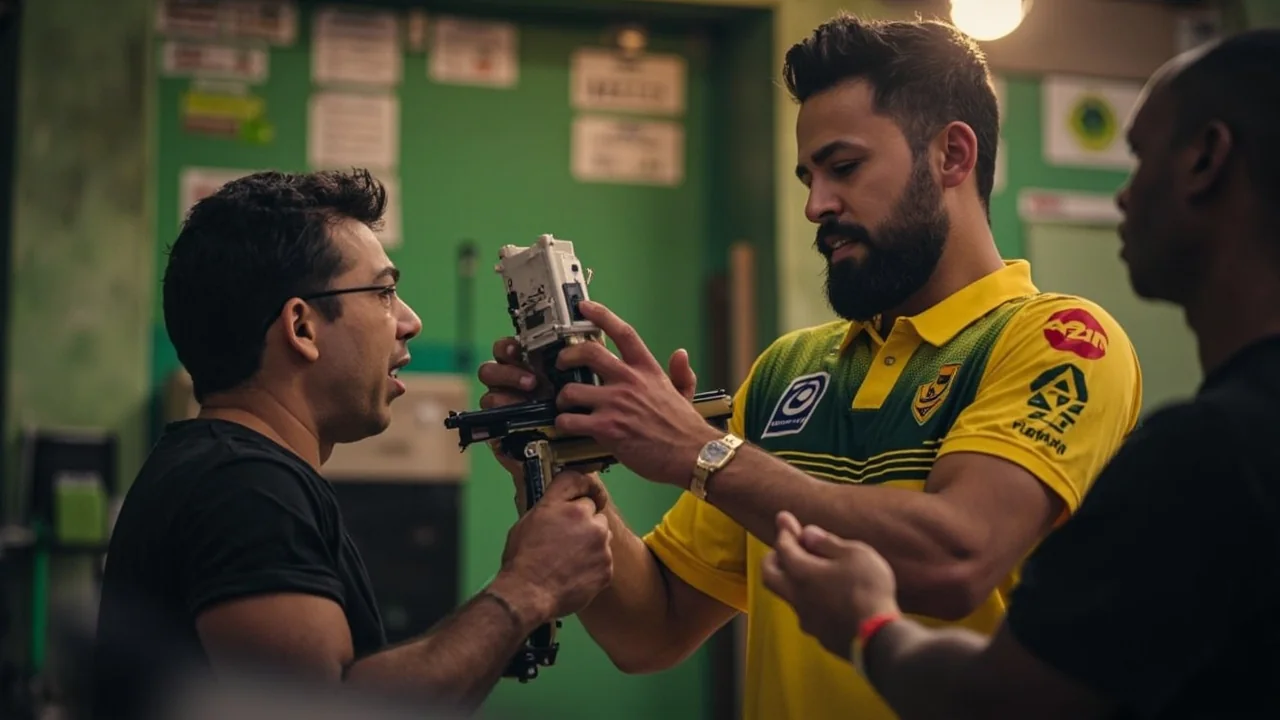
Why Shimron Hetmyer sat outside the multiplier
Hetmyer was the form batter Guyana had just leaned on to beat the Patriots, yet the preview did not promote him to captain or vice-captain. That restraint is itself instructive. Form is not the same as multiplier safety. Hetmyer could anchor an innings without producing a captain-scale score on any given night, and the preview evidently preferred to spread the multiplier across two different scoring routes instead of concentrating it on the form player. A beginner who copies that instinct — keeping form batters outside the captaincy pair even when the form is real — reduces the chance of paying double for a quiet match.
Step three: read the bowling group as a variety problem
Sandee Lamichhane, Mujeeb-ur-Rehman, Imran Tahir, Naveen-ul-Haq and the all-rounder Keemo Paul gave the preview four specialist bowlers across two distinct skill families. Lamichhane, Mujeeb and Tahir are wrist or finger spinners; Naveen offers left-arm pace; Paul adds seam-bowling all-round balance. The captain choice on Andre Russell, who also bowls, layered a fifth bowling skill — express-pace all-rounder — on top of that mix. The result was a bowling group that could attack both ends of a powerplay and both ends of a middle-overs spin phase without obvious overlap.
A bowling group that looks "deep" by reputation is not necessarily deep by variety. Four right-arm medium-pacers is one bowling group, no matter how famous the four names are. Two wrist-spinners, a finger-spinner and a left-armer is four bowling groups. The August 2020 preview's bowling set is a study in variety, not a study in star power. Mujeeb and Tahir were highlighted by name as stand-out performers, but the preview did not promote either to the multiplier, which is the correct restraint given that neither bowler's role inside the XI was yet a death-overs enforcer role. Strong real-world form is not automatically strong multiplier form.
The bowler-as-vice-captain trade
Pairing Tahir at vice-captain with Russell at captain is the structural choice worth copying for a beginner's mental model. The pairing says: pick a broad all-rounder for the main multiplier, then pair with a specialist whose peak upside is high even if his day-to-day involvement is narrow. The reverse — specialist captain, all-rounder vice — is a reasonable alternative for contests where wickets dominate the scoring, but it concentrates risk on a single discipline. The preview's choice generalises well because the Guyana–Jamaica match had both batting depth and spin-friendly middle overs. A modern reader who borrows the structure, then substitutes the squad names, is using the framework; one who borrows the names alone is playing a much riskier guessing game.
Step four: separate confirmed facts from preview inferences
A disciplined way to read any old fantasy preview is to draw two columns. The first column holds the confirmed facts: the venue, the date, the probable XIs, the broadcast partner, the named stand-out performers. The second column holds the inferences: captaincy choice, vice-captain pairing, batting order assumptions, bowling role expectations and the implicit reasoning about what "good upside" looks like in this fixture. The Guyana–Jamaica preview is unusually clean to test that method on.
The venue and probable XIs sit firmly in the first column. The decision to captain an all-rounder, the choice to pair him with a wrist-spinner and the implicit decision not to captain the form batter all sit firmly in the second. Beginners who keep the columns separate avoid the most common retrospective trap: confusing a confident tone in a preview with confirmed information about a result. The preview was confident about its XI selection. It said nothing about how Russell, Tahir or any of the bowlers actually performed. The preview is a record of how the writer reasoned, not a record of how the match went.
Step five: translate the framework to a modern fixture
Take any T20 match played this week and the framework is identical. The first column is built from official squad announcements, venue notes, pitch reports and any confirmed injury news. The second column is built from role projections: who anchors the innings, who finishes, who bowls at the death, who takes the new ball, which matchup history is meaningful and which is noise. The squad-balance decision — how many batters, how many all-rounders, how many bowlers, which bowling skills — belongs in the second column and is the single most important decision a beginner makes before any captain choice.
That is the practical inheritance of an old preview. The 2020 writer chose a 1+4+2+4 role split, picked three spinners plus one left-armer plus one seam all-rounder, captained an all-rounder whose multi-path scoring profile could absorb a quiet match, and paired him with a wrist-spinner whose peak upside was high. A modern reader can copy each of those four choices without copying the names, because the names depend on the squads of the day and the names will change. The structural choices travel; the player list does not.
What the preview confirms, what it infers, and why the labels matter
There is a clean way to summarise what an old fantasy preview actually proves. The venue, the toss time, the match start, the broadcast partner, the probable XIs and the named stand-out performers are confirmable from the preview alone. The captain pick, the vice-captain pick, the batting order assumptions, the bowling role expectations and the role-distribution logic are inferable from how the preview writes about the squad, but they are still the preview's inferences rather than facts about the eventual match.
That distinction is what makes a retrospective audit useful rather than misleading. The audit walks the preview's reasoning back through the framework a beginner needs to apply on deadline night. The match itself was played on 22 August 2020, with a result that the preview did not record and that this audit will not invent. Anything in the preview that survives the audit — the role split, the bowling variety, the captaincy structure, the discipline of pairing an all-rounder with a specialist — is what travels across tournaments and across years.
Lessons a beginner can take into the next contest
Read the preview as a worked example, not as a tip sheet. The five-year-old XI is useful for the order in which the writer considered the problem, not for the players themselves. The order — venue, probable XI, role split, bowling variety, captain structure, multiplier restraint — is the asset that survives across seasons and tournaments. Anyone copying the names into a 2026 fixture is misusing the document. Anyone copying the order is using it correctly.
Keep the date visible in every paragraph you write about an old preview. "Jamaica had one win in two matches" is a true sentence about August 2020 and a misleading sentence about a 2026 Jamaica team. The habit of stamping the date next to a form note is small, but it prevents old context from quietly becoming current advice. The same habit also keeps the audit honest: when a 2026 reader sees a 2020 form note, the right question is "would this squad still earn the same role distribution under today's playing conditions?", not "does this squad still hold its form?"
Finally, treat the role split as the most expensive single decision in any XI. A 1+4+2+4 split and a 1+3+3+4 split can both win a contest, but they win in different ways and they require different captaincy logic. Pick the split that matches your reading of the fixture, write down the role each player is being asked to fill, and only then choose the multiplier. The August 2020 writer chose a spin-heavy split, captained an all-rounder whose bowling matched the spin theme, and paired him with a wrist-spinner. A modern reader who picks a different fixture, a different split and a different multiplier can still use the same sequence. The sequence is what carries over.
The Guyana Amazon Warriors versus Jamaica Tallawahs match on 22 August 2020 has been played and the result is no longer the point. The point is the role-by-role reasoning that produced a fantasy XI before the toss: a 1+4+2+4 split, three spinners plus one left-armer plus one seam all-rounder, an all-rounder captain whose multi-path scoring profile could absorb a quiet match, and a wrist-spinner vice-captain whose peak upside was high. A beginner who copies that reasoning — and only that reasoning — into a modern contest is using a five-year-old preview exactly the way it should be used.
The preview, in one card
Questions readers ask next
Is this a prediction for a future match?
No. The article is a retrospective audit of a fantasy preview published on 22 August 2020. The match has been played and the squad information belongs to that date. No future fixture is being predicted and no team is being recommended for any upcoming contest.
Why read an old preview at all?
Because the reasoning survives the players. An old pre-match preview records how a writer ordered the role split, the bowling variety, the captaincy logic and the multiplier restraint before the toss. That sequence is reusable on any modern fixture, even though the player names are not.
Should a beginner copy the role split from the old preview?
The 1+4+2+4 split is one valid shape for a balanced T20 contest with spin-friendly middle overs. Beginners can copy the structure and substitute their own squad's names. They should not copy the specific names from August 2020, and they should not assume the same split works on a seam-dominated wicket.
Where do the wicketkeeper and bowling numbers come from?
They come from the suggested XI in the India.com preview dated 22 August 2020. The preview is a primary source for what was written before the toss. It is not a primary source for the eventual match outcome.
How is the 22 August 2020 date preserved in the article?
Every reference to form, squads and competition standing is paired with the year 2020. The article does not present any of that information as current form. Squads are labelled date-bound throughout.
Does the article recommend any paid contest or app?
No. The article is editorial and does not direct readers to a contest or a deposit. The role-by-role method described here is generic and applies to any T20 fantasy format, including formats operated outside this site. Adults only, where such formats are lawful.
Filed under Fantasy · How to Play. The full case study walks one 2020 preview back through the same role-by-role method a modern fantasy manager can apply before any deadline.